


What was then called ‘The Cosmopolitan’ was launched 140 years ago this month, in 1886, right in the middle of America’s Gilded Age. That’s the historical period, not the opulent TV drama of the same name which is Julian Fellowes’ follow-up to Downton Abbey. The actual Gilded Age, when everything suddenly had the appearance of gold, was the 20-year period following the Civil War when the United States changed from an agricultural to an industrial economy, low-born men like Andrew Carnegie and Jay Gould became richer than anyone had ever been before from steel and railways, shopping as a form of leisure activity was born and printed magazines had the beginning of their first and greatest boom.
Magazines like The Cosmopolitan attracted an audience of literate strivers, attracted by serialized stories from bold-face writers like Rudyard Kipling and Booth Tarkington. More crucially for the fundamental character of American magazine publishing, they also attracted advertisers. With even the biggest newspapers purely local and broadcasting not yet dreamed of, print magazines provided the only way of telling those readers about the first generation of branded goods which were beginning to glint from the windows of the department stores springing up in the cities.
For the first few decades of The Cosmopolitan, the ads were stacked at the back of the book where there was space for the unctous words and starched engravings it took to explain how Fairy soap might be held in the hand of a child and the fact that the Winchester rifle did not jam. The revenue the publishers derived from these ads, helped keep the price down, which grew the readership. In 1900, you could buy an issue of The Cosmopolitan for ten cents and a dollar would secure you a year’s subscription.
As its title attests, The Cosmopolitan was driven by the desire of America’s burgeoning middle class to feel they could keep up with old world standards of sophistication. In 1899, it was the first magazine to serialize “Resurrection”, Tolstoy’s last major novel.
In 1905, when it was acquired by William Randolph Hearst, he put an end to the magazine’s participation in the “muck raking” journalism that had brought the Gilded Age’s robber barons to Congressional heel, and had it specialize in light fiction from the likes of P.G. Wodehouse and John Galsworthy. It’s not hard to imagine the increasingly female readership of the inter-war years preferring to drink in the dewy ideal of American femininity depicted in the story’s accompanying illustrations. These popular fiction magazines prospered so much between the world wars that they were regularly denounced from the pulpit. After the World War 2, TV did what moral indignation could not.
By 1965, when Hearst decided to let Helen Gurley Brown spread some of the worldview she had expounded in her 1962 best-seller “Sex And The Single Girl” across an entire magazine, Cosmopolitan (without its definite article) was merely a shell she could use to build it on.
Oddly enough, the cover of her first issue, published in July 1965 – when The Rolling Stones “(I Can’t Get No) Satisfaction” was number one in the US – does not feature the word “sex” at all. But it does use “woo”, one of the expressions it would in time see off. By 1970, it was confident enough of the fact that it was seen as standing for the sexually-liberated, contraceptive-pill-using, Virginia Slims-smoking modern girl (“you’ve come a long way, baby”) with maybe a dab of designer Mary Quant’s Havoc behind her ears, that it was leading on the line “Can a girl be a virgin in 1970 and hold her head up?”
What soon became the world’s most famous magazine (and its most famous editor-in-chief) was, arguably, also the most profitable. It was said to account for 100% of Hearst Corp’s earnings.
By then, as UK jazz singer-turned-writer George Melly’s 1970 book had it, revolt had turned into style and “Cosmopolitan” was leading a march into a new world where 50% of editorial energy would go into projecting a very specific personality via a cover which, ideally, should look just like the previous one – only more so. These covers didn’t set out to reflect the times so much as represent their brand.Whether the cover girl was Farrah Fawcett or just another model, she was placed plumb centre and the cover lines, many of which were longer than some novels, were never allowed to obscure the deep cleavage and big hair that a Cosmo cover was all about. The message was simple. It didn’t matter where we girls had come from: we had clearly all discovered Smirnoff.
In March 1972, when the first British issue appeared, the editor Joyce Hopkirk had come from editing the women’s pages of The Sun tabloid and the contents of the first issue have a faint whiff of London’s legendary El Vino wine bar about them with chat show host Michael Parkinson, 36, going into detail about his vasectomy and a nod to the magazine’s grub street roots with an extract from an H.E. Bates novel. Even as late at 1976, agony aunt Irma Kurtz was still talking a readers through the experience of being “deflowered”.
There were always some frontiers that couldn’t be profitably crossed.
In the same year that Cosmo UK became the first of scores of overseas editions, Burt Reynolds was persuaded that posing nude for a Cosmo centerfold would sell tickets for his latest movie “Deliverance”. He was to find out that it didn’t and Cosmopolitan was to make the more useful discovery that readers much preferred naked men if they were clutching an endearing puppy over their privates.
In the current century, the magazine has advanced towards – and then retreated from – TV formats promising to take viewers behind the scenes of the glossy, having discovered that it is practically impossible (and theoretically undesirable) to let daylight in on magic. In the UK, Cosmo now publishes six print issues a year and is quarterly in the US. It claims a worldwide digital audience of some 70mn (about one-third in the US) and is keeping up a barrage of activity on all the digital fronts you would expect, including (reportedly) very profitable eCommerce.
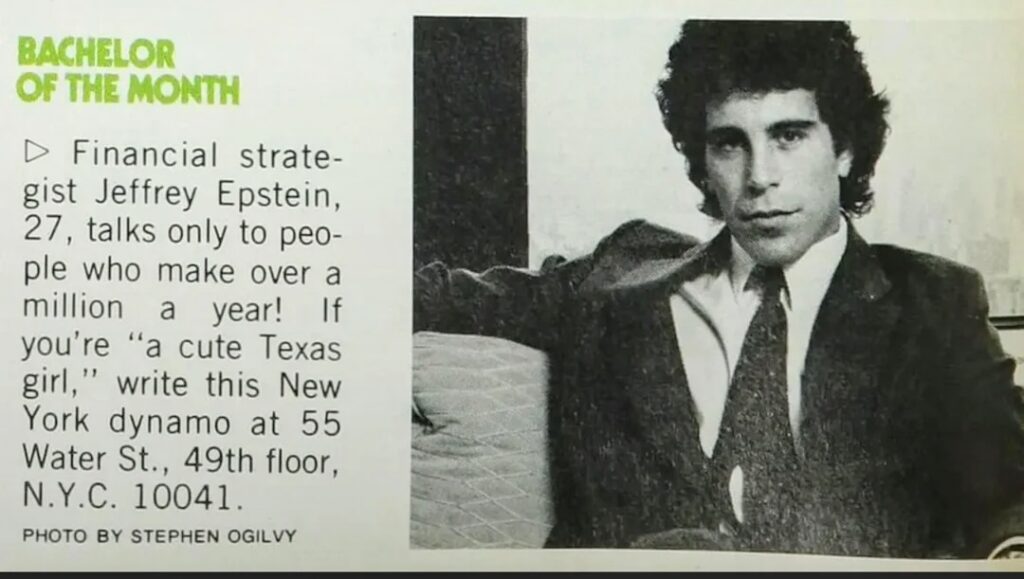
The world’s most famous magazine is not yet ready to talk about the fact that, in July 1980, the US edition’s Bachelor Of The Month was Jeffrey Epstein, age 27. Hey, if you’ve been going 140 years, there’s bound to be the odd skeleton in the closet.