





Almost everything about the magazine called Hola! in Spanish-speaking markets and Hello! (in English) defines successful publishing against the odds. Launched 80 years ago next month, in a country that had been ravaged first by the Spanish bloody civil war and then by World War 2, Hola!/ Hello! have become truly global print and digital brands. They have managed this during 25 years in which the internet has shredded magazines everywhere.
But they have always been a different sort of media brand.
Back in 1944, Hola! had sought to offer nothing but good news and uplifting content for a country still in the grips of dictatorship. It was created by a young newspaper journalist, Antonio Sánchez Gómez, who dreamed up a weekly picture magazine devoted to “Espuma de la vida” (“the froth of life”), showing readers the lives of the rich and famous. It was light relief from the horrors of war.
In that grim climate, it effectively created celebrity journalism a full 30 years before People magazine in the US and more than four decades before the once-gilded UK magazines Now and Heat. But Hola! wasn’t just the first of what – during the early years of the 21st century – became an exploding world of celebrity magazines. It was, arguably, the only magazine to stay positive and provide celebrity gossip, filth and scandal – without any filth and scandal. And that’s how it’s been for 80 years of welcoming readers into the homes of stars of screen, music, royalty, politics and fashion.
In 1956, it had chartered a plane to bring back pictures of Grace Kelly’s wedding to Prince Rainier of Monaco. The magazine subsequently earned a reputation for paying high fees for photo-packed interviews. Its former longtime fixer, the Marquesa de Varela, travelled the world laden with cash to get the scoops. In 1990, she is said to have paid £250,000 for a profile of the since-disgraced Prince Andrew and his wife, Sarah Ferguson.
In 2024, the third generation, family-owned Grupo Hola has some $125mn of global revenue and employs 400 people in Spain (60%), UK (30%), and US/ Mexico (10%). There are 21 editions of Hola! and Hello! in eight languages and more than 120 countries, with a global print circulation of over 3mn. Six editions are wholly-owned, the rest published under licence. Five are weekly magazines, three fortnightly and the rest monthly.
The largest revenue is from the weeklies in Spain, UK, Canada, Argentina and Thailand. Hola! in Spain has a weekly circulation of 225k copies and 9mn digital uniques. In the UK, Hello has a circulation of 155k weekly – some 50% down in 10 years with a £3.15 cover price that is 60% higher. The gobal digital audience is claimed to be some 45mn (25mn through Hello and 20mn through Hola).
The twin brands are one of the world’s most successful print and digital magazines.
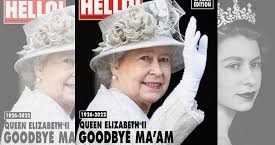
Critics have variously sniped at Hello!s “grovelling indulgence towards people temporarily gilded with stardom or luck or the arrival of a new partner in love”. Its objective always seems to put a brave face, and positive construction, on what has been described as “the slow-motion highway crash of famous people’s lives”. What is clear, though, is that the magazine has always put a premium on exclusive photography and formulaic Q&A interviews. The approach makes it easy both for inexperienced journalists with tape recorders, and for readers who want to skip through long conversations. Readers and “subjects” like the high production values and even the clunky page designs.
In an era when gossip is all over the web, not least on the sites of celebrities themselves, the unchanging format has, arguably, come into its own because exclusive photography has yet greater value and the plonking Q&A format has more apparent authenticity than unattributed, online “news”.
The New York Times said:”In many ways it is a throwback, recalling the mid-20th-century American movie magazines in which stars were dreamily photographed with their glamorous houses, adoring spouses and rosy-cheeked children.” It added: “The magazine has served as a de facto public relations agency, exchanging reverential coverage (and payments that can run to six figures) for intimate, if carefully choreographed, access to elusive celebrities”.
Many of the biggest stories (like celebrity weddings and births) are products of “chequebook journalism”. Even those celebs (and Royals) who don’t send their agents to negotiate a price, know that Hola!/ Hello! will be kind and allow them to approve the interviews and retouch the pictures. But – as Hola!/Hello! prepare to celebrate 80 years of cosy content – the numbers underline the enduring success of a media brand which is still exemplified by a printed magazine. For millions of people around the world, Marilyn Monroe, JFK, Princess Diana and Queen Elizabeth have been immortalised on the pages of Hola! and Hello!.
But, for almost 50 years, it was exclusively Spanish.
Globalisation of the 80-year-old magazine brand came with UK and US launches either side of the arrival of the internet. It was a strategy of the founder’s late son Eduardo Sánchez Junco who was described by the Financial Times as “the man who globalised the exclamation mark. Having watched his parents create a hugely successful magazine based on reverential gossip for the crowned heads of Europe, Junco oversaw the expansion of ¡Hola!’s distinctive style of ‘soft fawn’ into an international brand – spawning imitators across the world”. The UK, with its globally-recognised royal family, was an obvious stepping stone in the internationalisation of Hola!:
UK 1988: The launch of Hello! in London introduced the Hola! traditions to English-speaking audiences. It started with an exclusive photoshoot with Princess Anne in Buckingham Palace (perhaps the first such interview at home given by a British Royal). The magazine was soon selling almost 1mn weekly at the premium price of £1.85.
Then came trouble.
Five years after the Hello! launch, punchy Brit publisher Richard Desmond launched the imitative OK! magazine. It signalled the start of a cat-and-mouse chase for high-priced .celebrity stories. OK! quickly paid £2mn for pop star Michael Jackson’s baby pictures and £1mn for footballer David Beckham’s wedding.
Desmond says that OK! sold 6mn Beckham-related copies at £2 each and – in 1999 – achieved a higher circulation than Hello! for the first time. But the culmination of the bitter rivalry was Hello! pirating OK!s exclusive (£1mn) coverage of Michael Douglas’ wedding in 2003 which resulted in the Spanish publisher paying millions of pounds in legal damages and costs.
OK!s average annual circulation (like Hello!s) peaked at some 750k but it is notable that Desmond’s former magazine is now selling just 40k, less than one-third of its 2018 circulation when sold to news publisher Reach Plc as part of a £200mn package including the Express and Star national daily newspapers.
The fierce rivalry is no more.
For Hello!, Princess Diana had been the symbol of its early UK success. The owner was said to have paid $1mn for paparazzi photos of her sunbathing topless, which he destroyed, thus winning her trust. The magazine’s unusual relationship with the UK royals was underlined by the way that some of the lesser members sold their stories and pictures for hundreds of thousands of pounds, while the most valuable content of all came – gratis – from Diana herself. While Hello! had become a substantial media brand in the UK, waspish newspaper commentors couldn’t help narrating “the curse of Hello!”. In the first 10 years of the century, it was claimed that 20% of the weddings featured on the magazine cover had ended in divorce.
US 2016: The digital-only launch turbocharged the growth of Hola! among Hispanic audiences in North and South America, which had started with the 2010 launch in Argentina. The Americas had become – with Canada, Thailand, Spain and the UK – one of Hola!s five largest markets. With some 45mn Hispanics, the US represents major digital growth both for Hola! (4mn monthly uniques) and Hello! (11mn). They also operate the 11-year-old Latam TV, a 11-year-old, Miami-based Hispanic broadcaster reaching 20mn homes. The publisher says: “The US Latino market represents the 13th largest global economy in the world. That alone is a really big statistic in terms of opportunity and why this market matters. The US Latino market is incredibly under-served and under-represented.”
Hola!/ Hello! is a distinctive media platform. But, perhaps the real standout is the durability of its business model, propelled by something like five major (big fee) exclusives each year. It is this blockbuster content which fuels the growth of digital traffic, sells millions of magazines and has created a media brand which generates 60% of its revenue from print and 40% from digital.
That and the fact that advertising still accounts for almost 75% of the $125mn revenue is explained by the way the magazine competes so effectively for the upmarket advertising shared, for example, with Vogue and Elle. Having once competed fiercely with mass market gossip weeklies, Grupo Hola now enjoys the luxury of substantial advertising revenue and premium-priced weekly copy sales. This is encouraging digital experimentation with its freemium sites now building substantial subscriptions as well as “per issue” passes.
More than anything else, the Hola!/ Hello! secret sauce is its Spanish-English versatility in content, marketing and distribution. Many digital readers alternate between the two languages; the tech makes it seamless and simple. You also don’t have to ask Hola! executives about the future of print because it is clear that magazines remain a vital (and highly profitable) part of their business. And they have invested in revenue and content-sharing technologies across the world. In some ways, this ultimate specialist business has solved the puzzle of how to develop large-scale (and paying) digital audiences while preserving the promotional power and profit of print. Presumably, the future will include even more video.
After decades of sneers from their peers, the Hola! family (led now by the founder’s grandson and two grand daughters) have built a powerful, longterm media business which is, well, as heartwarming as much of its journalism. After 80 years, perhaps it has only just begun. Happy Birthday.
