





In September, the US-based Red Ventures (RV) celebrates its 25th anniversary. For Ricardo (Ric) Elias, the CEO-founder of the company that owns and operates major lead gen-funded digital brands including Bankrate, The Points Guy, Lonely Planet and CNET, the celebrations might just be a bit more relief than celebration after a bruising four years since it spent almost $3bn on acquisitions.
The company’s revenue may have fallen 20% in three years to perhaps $1.6bn in 2023. And EBITDA margins – once 30% – are estimated by ratings agencies to fall to 24% this year. That may mean Red Ventures making just $400mn of profit – down from some $600mn soon after its 2020 spending spree.
Some $500mn (5x revenue) of that acquisition spending – six months into in the pandemic – was splashed on CNET from CBS-Viacom. It became a nightmare last year after the legendary digital publisher was embroiled into controversy over a failure to disclose the use of AI in its journalism. Back in January 2023, Futurism found that CNET had been quietly publishing AI-generated articles under the byline “CNET Money Staff.” Much of the AI-generated content actually contained glaring errors and plagiarism that resulted in corrections. The scandal was followed by a 10% reduction in CNET staffing (claimed to be unconected). But, in 2024, has come the disclosure that Red Ventures is hoping to sell CNET to recoup (at best) half of what it had paid four years ago.
It’s a tough time for one of the world’s most fascinating but elusive business leaders.
Three years ago, the New York Times described Red Ventures as “the biggest digital media company you’ve never heard of”. You may not even know Elias’ name unless you are one of the 10mn+ people who have watched his TED Talk “3 Things I learned When My Plane Crashed.” He was a survivor of the crash-landing of US Airways Flight 1549, known as the “Miracle on the Hudson”, the aircraft that made an emergency landing on New York’s river in 2009. The incident was immortalised in the Tom Hanks’ movie “Sully”.
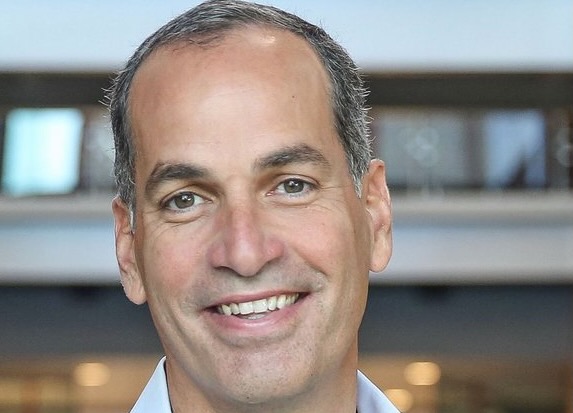
For Elias, Flight 1549 was a truly life-changing experience and made him determined to re-make his life and his company. The digital marketing firm had been launched in 2000, just in time to face the dot-com bust. But it weathered the storm and was valued at some $1bn by 2007. RV has since been described as the largest digital publisher in the US but actually may have similar revenue to Dotdash Meredith which is finally coming out from under its tricky $2.8bn acquisition of Meredith magazines. Acquisitions made during the economic fog of the pandemic have, of course, caused a lot of grief for companies everywhere.
But Ric Elias has been nothing if not determined.
Few of his peers at Boston College in 1986 would have predicted business success for the student (a native of Puerto Rico, speaking what he says was broken English) who had arrived a whole term late because he had been trying to make it as a professional basketball player. He and a friend, Dan Feldstein (CMO of Red Ventures until retiring this year) started a business to drive online shoppers to physical stores. It all but failed and they spent the next few years repaying their investors, including some of their more instantly successful MBA classmates at Harvard.
They created RV in 1999 with the seemingly simple objective of “using data to power e-commerce”. They started by selling subscriptions for DirecTV and burglar alarms for ADT Security, becoming SEO experts and building up data on customers reached by phone and online. They soon realised, though, that the best profits were to be made from owning brands not just using data to sell on behalf of others.
Then came Elias’ near-death experience: “I was given the gift of a miracle, of not dying that day. I was given another gift, which was to be able to see into the future and come back and live differently. I challenge you guys that are flying today, imagine the same thing happens on your plane – and please don’t – but imagine, and how would you change? What would you get done that you’re waiting to get done because you think you’ll be here forever? How would you change your relationships and the negative energy in them? And more than anything, are you being the best parent you can?”
He decided to use his platform to “leave the woodpile higher than he found it” – launching non-profit operations from Red Ventures, creating educational opportunity and social mobility for the vulnerable and disadvantaged. His causes have included a college scholarship program for undocumented US immigrants. In 2018, he launched the social enterprise Forward787 to raise $100mn to build businesses in Puerto Rico, a neglected part of the US 1,000 miles off Florida whose citizens don’t even get to vote in the country’s presidential election.
Elias started transforming it into the business where he would want to spend his whole career: “This is the perch from where I’m going to live the rest of my life. We’re not going public, we’re not selling. Red Ventures, as is, will never be a public company as long as I’m running it.”
He persuaded his largest shareholders – the private equity firms General Atlantic and Silver Lake (together owning 40%) – to back an ambitious growth plan. It spent some $3bn on 10 digital acquisitions, including: Imagitas (data processing), Bankrate (personal finance, acquired for $1.24bn), The Points Guy (travel), Slumber Yard (mattress reviews), Psych Central (mental health), Healthline ($300mn), and travel publisher Lonely Planet ($500mn).
But the deal that helped to transform Red Ventures into a global company was RVU, the 2018 joint venture formed with Silver Lake to acquire the $3bn UK listed ZPG group including the price comparison and classified sites Zoopla, uSwitch, Money, Prime Location, Confused. com, Mojo and Tempcover. The London-based group now has £400mn revenue.
In 2020, Elias saw the CNET acquisition as equally significant, bringing brands including ZDNet, Metacritic, Chowhound, TV Guide, and Gamespot. It was founded in 1992 and became one of the most popular tech networks in the early days of the web. It had been acquired by CBS in 2008 for $1.8bn. Since then, it had faced fierce competition from newer sites including: Verge (Vox Media), Gizmodo (G/O Media), TechRadar (Future), and TechCrunch (Verizon). In recent years, CNET had shifted its focus to video.
Elias hailed the acquisition: “Over the last 25 years, CNET has built a dynamic portfolio of brands with well-earned authority on such topics as consumer tech and gaming that play an increasingly important role in people’s lives. I believe that the combination of Red Ventures customer experience platform and CNET’s rich content and deep editorial expertise greatly benefits both our audiences and our partners.”
But it didn’t work out like that.
Soon after acquisition, CNET staff were telling news media about the deterioration in their working conditions and later came warnings of a slower ad market, plunging traffic and rising interest rates. Then came the AI scandal and layoffs which drove CNET employees to form a union. The whole saga has undermined what had been Red Ventures’ great reputation for integrating acquisitions and growing revenue.
But its obviously proved difficult for RV to sell the scandal-hit publisher, even at a heavily-discounted price. Nothing has been announced.
Today, the Charlotte, North Carolina-based Red Ventures is a 100-site conglomerate claiming to reach 60% of all US people (and 750mn reader-users worldwide) every month by creating SEO content at scale. It has some 4,500 employees (mostly in the US and UK).
It publishes content designed to rank in Google for “high intent” queries: “best laptop” makes clear that user-viewers are searching for a product. The traffic is monetized through affiliate deals which reportedly can yield $900 per lead for a Chase Sapphire credit card. RV also has an intent-driven advertising network.
In simple terms, RV takes readers who already want to buy something, informs the purchase, then takes commission from the sale in key verticals including finance, education, health, tech and travel.
The company is different and not just because of the singular character of its founder. Its headquarters is a 180-acre campus with a cluster of modern buildings, a fire pit, a six-lane bowling alley, ball courts – and 264 residences for employees who choose to live where they work.
But it’s been rocked by the decline in revenue.
Despite the rating agency downgrades, RV has calmed shareholders with, for example, the RVO Health joint venture with United Health Group which has also helped it to pay down $1.4bn of debt during the past few years.
Ric Elias is full of long-term vision and has said his 40% private equity shareholders don’t have any rights to buy the business. The engaging founder talks like the owner, complete with ambitions to create a generations-old company that will neither be IPOd nor sold. But he “only” has a 20-25% share – and has plenty of plans to keep buying, borrowing and growing. So, who knows what may happen to RV’s virtuous commitment to measure its impact “not by profit but by our ability to positively change the trajectory of the people and communities we touch”?
Dotdash Meredith ($1.7bn revenue), Future ($1bn), Ziff Davis ($1.5bn) and Red Ventures ($1.6bn) are all using similar approaches to content and tech in order to monetise “intent” audiences. Will all four be separate and independent companies in, say, three years?
