


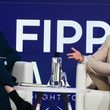

Jon Steinberg’s first nine months in the UK as CEO of Future Plc have been a baptism of fire. The UK-listed transatlantic magazine-media group yesterday (Thursday 7 Nov) reported its results for the year ended 30 Sept: £789mn revenue (-4% on 2022) and EBITDA of £277mn (-6%). The profit margin was unchanged at 35%.
The former president of BuzzFeed and founder of Cheddar News said US revenue (40% of the total) had declined by 19% like-for-like and that – although the US digital advertising market is seven times the size of the UK market – Future’s US digital revenue is only twice that of the UK. For Future, however, the “simple” difference between the UK and the US is that it has has more established brands, direct sales and sales teams in the UK – and more than five-times the number of active clients than the US.
The loss of digital revenue (-1% in the UK and -7% in the US) was further attributed to weakness in the tech sector that had fuelled a WFH eCommerce boom during the pandemic. Some 35% of Future’s revenue (still) comes from magazines.
Despite the fact that the results were in line with expectations – and some brokers again rated the company a ‘buy’ – the diverse explanations for the trading softness (market, Google algos, staffing) seemed to spook the market.
The immediate shareholder reaction was a 15% fall in the share price to £639p (-53% YTD). The sell-off reduced Future’s market cap to £736mn (enterprise value: £1.1bn). It was tough for a company which has, in four years, increased revenue by 130% and EBITDA by three-times, with margins that have now peaked at 35%. But it has spent some £1.5bn on acquisitions over the past five years and now faces the tougher task of beating the revenue headwinds with less M&A (at least for now):
| Future Plc £mn | 2023 | 2022 | 2021 | 2020 |
| Revenue | 789 | 825 | 607 | 340 |
| EBITDA | 277 | 294 | 215 | 93 |
| Margin | 35% | 35% | 32% | 27% |
| EPS | -7% | +24% | +77% | +57% |
It’s not the first media company to reassure investors that – in tough digital times times – its low-priority, decaying print revenues are “resilient” (UK news group Reach Plc also did it last month). But Future – whose 38-year history has, of course, been punctuated as much by disappointment and crisis as rapid profit growth – is trying hard to motivate its shareholders with upbeat news about investment in new resources, a £45mn share buyback program, another £45mn spent on acquisitions, and £96mn of paid-down debt.
It has separated the revenue for its Go Compare price comparison site for the first time, which reveals the extent to which this seemingly non-core business (acquired for £594mn in 2020) is the largest and best performing brand:
| Future Plc £mn | 2023 | 2022 |
| UK | ||
| Magazines | 196 | 215 |
| Digital | 123 | 138 |
| Go Compare | 158 | 146 |
| UK total | 477 | 500 |
| US | ||
| Magazines | 78 | 75 |
| Digital | 234 | 251 |
| US total | 312 | 326 |
| Total revenue | 789 | 825 |
GoCompare accounts for 20% of Future’s revenue and 60% of its affiliate eCommerce revenue which puts into perspective what had been believed to be the company’s dramatic organic success in online retailing (it’s not really that, of course). Its MyVouchers shopping discounts grew revenues by 5% last year.
Almost buried in the financials and shareholder sniping was the CEO’s plan to streamline the sprawling company.
Steinberg said Future’s strong £253mn free cashflow (90% of EBITDA) would fund an additional 200 people, about half in content related jobs and 40 new sales people in the US. This was in support of his strategy to divide the portfolio into:
- “Hero brands” : 12 top earners including GoCompare, Tech Radar, Games Radar, Tom’s Guide, Country Life, Livingetc, Who What Wear and Marie Claire, accounting for 50% of revenue and (my estimate) 75% of all profit;
- “Halo brands” : 30% of revenue from 70 lower-growth but profitable brands including space.com and SmartBrief;
- “Cash Generators”: 150 brands including What’s on TV, accounting for 20% of total revenue, mostly UK print magazines. These brands are almost the definition of a long tail and highlight Future’s ways ways to unlock its next phase of growth.
My takeouts from the company’s soggy financial results are:
- The Hero etc groups are not, at this stage, an organisational change but merely identification of the brands in which Future will invest additional resources for reviews, social media platforms and video. In practice, this is likely to be an interim step towards a 1-2 year dramatic streamlining of the 200-brand portfolio and its 3,000 people. The Cash Generator tag is certain to attract the attention of would-be buyers for many of the smaller UK magazine brands, so this may hasten a reorganisation which – as long as it can safely offload much of the rump of the portfolio – could transform the company and its prospects with most revenue coming from digital and the remaining magazines centred on subscriptions rather than news-stand. Refining the performance of these Hero brands will embolden the company as it contemplates the divestment of its long tail of low-growth brands, especially in the UK. Given this first-stage announcement, investors will accept the inevitable cost and (perhaps) profit loss of a slimdown – especially it manages to get good proceeds from the sale of some magazine brands like TV listings. I bet the incoming calls have already started.
- Future’s B2B media group (including the US-based SmartBrief, acquired for $65mn in 2019) may not be for sale after all. Although no announcement has been made to reverse the previous sell-off plan, we may draw our own conclusions from this week’s breakout of total B2B revenue (£63mn) showing standout 3% growth, ironically, the £40mn acquisition of ActualTech lead gen for B2B, and the inclusion of SmartBrief in the category of “Halo brands”.
- Implementing plans for Future US to replicate the UK in advertising sales is easier said than done. The UK includes more higher margin, direct advertising, whereas the US is a greater proportion of agency and programatic revenue. And, of course, Future is a much less significant operator in the US. Inevitably, this points to a transformative acquisition in the US, perhaps during 2024, when/if overall revenues have started to recover, along with Future’s share price. But next year’s revenue growth may have to be more than the targeted single-digit growth, in order to get investor support for a large acquisition.
- After enjoying some dizzy years of tech-focused eCommerce, Future wants to make its online shoppers less dependant on Google and its revenue less dependant on Amazon. Of course.
- Yesterday’s announced departure of highly-rated CFO Penny Ladkin-Brand during 2024 confirms the end of an era during which she and former CEO Zillah Byng-Thorne had transformed Future. Some analysts had been surprised that Ladkin-Brand was not seriously considered for the CEO post and perhaps she was too. But a new CFO might now lead the momentous slimdown, presumably during 2024-5.
As Jon Steinberg talks through his Growth Acceleration Strategy, investors know that the planned £20mn investment in 2024 is just the first step in a fundamental change to focus on its highest-growth brands in the UK and US. His quick workings might show that the combination of his 12 Hero brands and, say, 40-50 other Halo brands would (with overhead savings) generate 100% of Future’s current profits – and promise better growth. Time to sharpen the pencil.
After a mere nine months in the job, the CEO is moving quickly and the negative shareholder reaction to his first results will prompt acceleration of the streamlining plans. They could – incidentally – even make merger with the similar, US-based Dotdash Meredith a yet more attractive prospect for both companies. Buckle up.
